


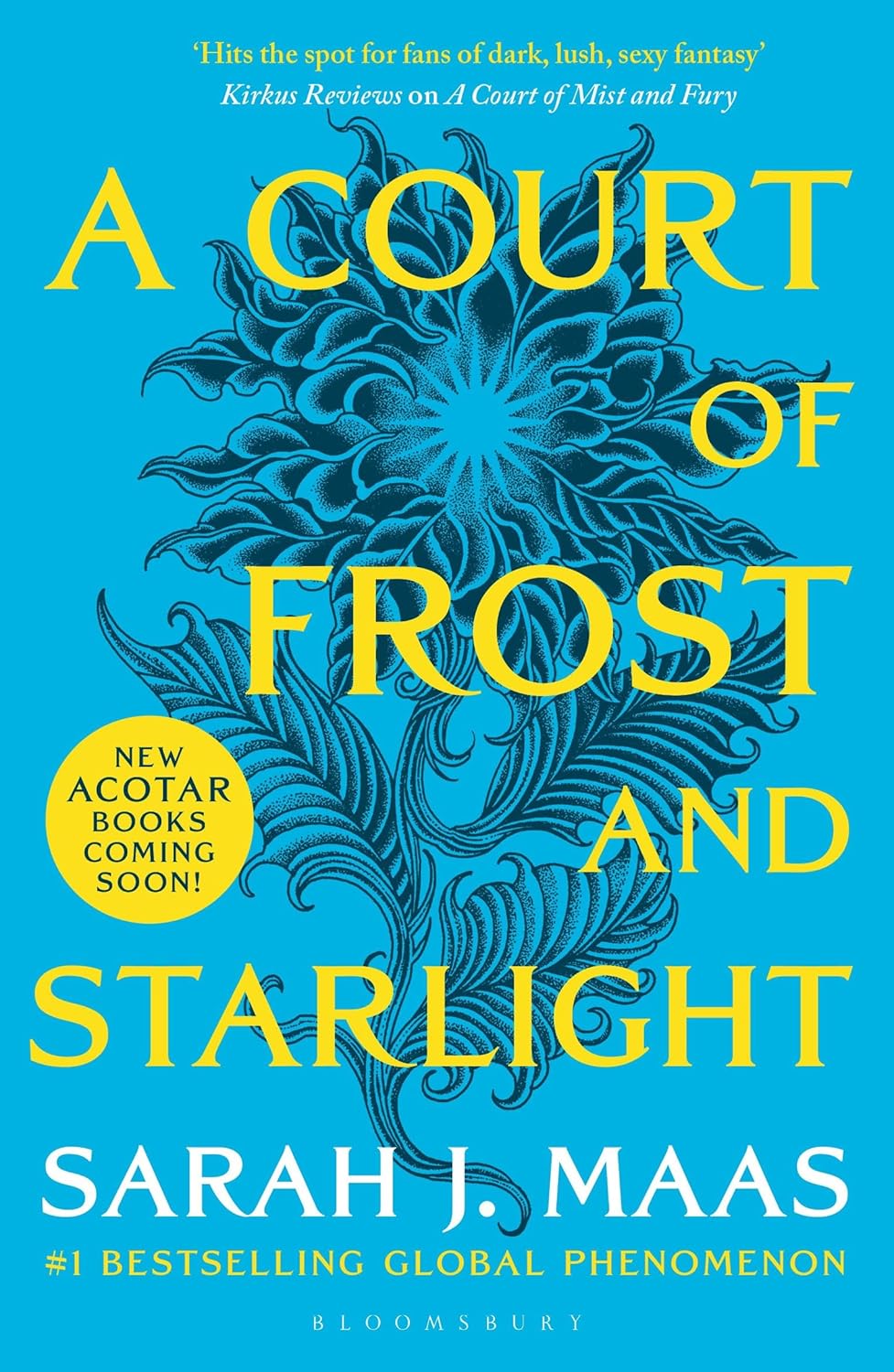
A Court of Frost and Starlight Review: The Book I Couldn't Finish for Two Years
My review of A Court of Frost and Starlight by Sarah J. Maas, book 4 of 6 in A Court of Thorns and Roses
- Romance
- Moderate
- Spice
- 2 out of 5
- Tone
- Bittersweet, Heartbreaking, Cosy
- Pacing
- Slow
- Tropes
- Who did this to you
- Series
- Ongoing series
The reading experience
A Court of Frost and Starlight Review: The Book I Couldn't Finish for Two Years
Spoiler-free review first, followed by a clearly marked discussion of Book 4. No spoilers from later books.
I have a confession to make. After spending most of July 2024 completely obsessed with the ACOTAR series, I didn't actually finish A Court of Frost and Starlight until 2026.
Yes. Two years later.
This is particularly ridiculous when you consider that I read the first three books in the space of about two months, having only discovered the series in June 2024. I was completely hooked, emotionally invested in the characters and perfectly happy spending an unreasonable amount of my life in Prythian.
Then I started Book 4.
I made it approximately 10% of the way through before deciding that, actually, I had better things to do. Such as absolutely anything else. And it wasn't because I'd fallen out of love with the series. Quite the opposite. I went back and reread Books 1–3 twice. I even bought the dramatised audiobook editions, which are AMAZING, by the way. Full-cast performances, sound effects, music and enough atmosphere to make doing the housework considerably more interesting. They're absolutely worth the Audible credits to me, even when a book is split across two purchases.
But somehow, despite all that enthusiasm, I still couldn't get into A Court of Frost and Starlight. It took the announcement of the new ACOTAR release for October 2026 to finally convince me to do another complete reread and push through.
And do you know what? I actually enjoyed it in the end. Not enough to pretend it's remotely on the same level as the previous three books, but enough to appreciate what Sarah J. Maas was trying to do.
What is A Court of Frost and Starlight about?
A Court of Frost and Starlight, often shortened to ACOFAS, is the fourth instalment in Sarah J. Maas's A Court of Thorns and Roses series. It's a shorter companion novella rather than a full-length novel, bridging the events of A Court of Wings and Ruin and A Court of Silver Flames.
The story takes place several months after the war with Hybern. Feyre, Rhysand and the rest of the Night Court are attempting to rebuild their lives while dealing with everything they've survived.
Winter Solstice is approaching, and rather than another enormous battle or life-threatening magical catastrophe, we're treated to the characters preparing for celebrations, buying presents, spending time together and trying to work out what comes next.
There's plenty of reflection, emotional baggage, unresolved relationships and the occasional political problem. But compared with the earlier books, very little action. Think of it as a Christmas special for people who've survived a fantasy war and now desperately need therapy.
Unfortunately, quite a few of them aren't particularly interested in getting better.
You could genuinely stop after Book 3
Something I realised during my very extended break from ACOFAS is that the first three books work surprisingly well as their own complete story.
Feyre begins as a human huntress struggling to provide for her family. Across three books, she discovers Prythian, survives Amarantha, falls in love, finds her place in the Night Court and helps defeat Hybern.
There's a proper beginning, middle and ending. Major conflicts are resolved, relationships develop and the characters finally get a chance at some peace.
You can finish A Court of Wings and Ruin, close the book and carry on with your life feeling reasonably satisfied.
Which is exactly what I did.
Well, apart from the carrying on with my life part. I was still listening to the dramatised versions and revisiting the first three books whenever I fancied returning to Prythian.
But I didn't feel desperate to know what happened next.
And I think that's part of why I struggled with Book 4.
After three books filled with enormous revelations, terrifying creatures, emotional devastation and world-changing battles, suddenly reading about shopping, presents and everybody's feelings was a rather dramatic change of pace.
Where's the villain? Where's the danger? Why are we discussing household arrangements?
I appreciate that these people deserve a holiday, but unfortunately, I was hoping for another plot.
Everyone is miserable, and honestly, fair enough
One thing ACOFAS does make very clear is that winning a war doesn't mean everybody immediately becomes happy.
The characters have survived some absolutely horrific experiences. They've lost people they love, witnessed terrible violence and endured situations that would leave anyone struggling.
And now they're expected to return to ordinary life.
Which, apparently, is considerably harder than it sounds.
Feyre is trying to rediscover her love of painting while dealing with the guilt and grief left behind by the war. Rhysand is managing the political consequences, and the rest of the Inner Circle have their own problems.
Tamlin is barely functioning, Lucien doesn't seem to know where he belongs, and Nesta is doing a spectacular job of pushing everyone away.
The whole thing feels much more introspective than the previous books.
And although I understand why Sarah J. Maas chose to explore these emotions, I found it difficult to stay interested when I was used to considerably more happening.
It's not that the subject matter is unimportant. It's just a very different reading experience.
Nesta, please. Cassian is RIGHT THERE.
I need to discuss something that became increasingly frustrating throughout this book.
Nesta.
Now, I understand that Nesta has been through an enormous amount. The events of the war, particularly what happened to her father, have clearly affected her deeply.
She's angry, withdrawn and struggling to connect with the people around her.
I can appreciate that.
But does she have to be quite so determined to reject Cassian?
CASSIAN.
The enormous, long-haired, ridiculously muscular Illyrian warrior who also happens to be funny.
Funny!
Do we understand how important that is?
He's strong, loyal, protective and has an actual personality beyond looking devastatingly attractive and brooding in corners.
He is rapidly becoming my book boyfriend.
And Nesta is treating him like an unwanted delivery.
Look, if she's genuinely not interested, that's absolutely fine. I'm very happy to take him off her hands.
I'll even collect him. No delivery charge necessary.
Of course, I know her behaviour is connected to everything she's experiencing. She's clearly not in a good place emotionally, and pushing Cassian away is part of a much bigger problem.
But I still found myself getting frustrated with her.
Especially because Cassian brings some much-needed humour to the series, and their interactions have the potential to be enormously entertaining.
If only Nesta would stop emotionally drop-kicking him across Velaris every time he tries to be nice.
Is A Court of Frost and Starlight boring?
For me, initially, yes.
Spectacularly so.
And I don't think there's anything wrong with saying that, even when you absolutely love the series.
ACOFAS is quieter, slower and much more focused on the everyday lives and emotions of its characters. If you've just finished the first three books and are expecting another enormous fantasy adventure, you might find the change rather jarring.
I certainly did.
But after finally reading it in 2026, I can also see why other readers might enjoy it.
There's something comforting about spending time with characters you love when they're not constantly seconds away from being murdered.
You get to see friendships, family dynamics and little moments of ordinary happiness that don't always fit into the middle of a war.
And the story begins laying the groundwork for what comes next.
It's less about defeating a new enemy and more about discovering what happens when the fighting stops.
That doesn't make it particularly exciting, but it does make it useful as a bridge between the larger books.
I just wish I'd understood that before trying to read it immediately after ACOWAR.
Are the dramatised ACOTAR audiobooks worth it?
This is slightly separate from my opinion of ACOFAS itself, but I have to mention the dramatised editions because they're one of my favourite ways to revisit the series.
Rather than listening to one narrator perform every character, you get a full cast, cinematic sound effects and music that make everything feel much more immersive.
It's essentially a film playing inside your headphones.
And after reading the first three books, I loved going back and experiencing them differently.
Some volumes are split into multiple parts, which means you may need more than one Audible credit to complete a single book. Normally that might annoy me, but I've genuinely enjoyed the production enough to feel they're worth it.
If you're planning a reread, I'd absolutely recommend trying a dramatised edition.
Just don't expect a full cast and dramatic background music to magically turn ACOFAS into an action-packed adventure.
Even professional voice actors can only do so much with Christmas shopping.
My verdict: Was it worth finally finishing?
Yes, although it took me a rather embarrassing amount of time to discover that.
A Court of Frost and Starlight is easily the biggest change of pace I've experienced in the series so far, and I still wouldn't rate it particularly highly compared with the first three books.
I'd put it somewhere between two and three stars.
Not because it's terribly written or because I dislike the characters, but because it simply wasn't the kind of story I was hoping for.
I missed the action, the huge revelations and that irresistible need to find out what would happen next.
But after finally finishing it, I appreciated the quieter moments, the emotional aftermath of the war and the way the book begins preparing us for the next stage of the series.
I'm glad I eventually persevered.
Would I reread ACOFAS as enthusiastically as the first three books? Probably not.
Would I recommend it to somebody who wants to continue the full ACOTAR series? Yes, with the warning that it's a short, reflective interlude rather than another epic adventure.
And honestly, after everything these characters have been through, they've probably earned a quiet Winter Solstice.
Even if I spent most of the book wishing somebody would attack something.
SPOILERS BELOW: LET'S TALK ABOUT A COURT OF FROST AND STARLIGHT
Major spoilers for Book 4 from this point onwards.
No spoilers from A Court of Silver Flames or later books.
Now that we can discuss the details, I think my biggest issue with ACOFAS is that everybody is either traumatised, emotionally unavailable or trying to buy Christmas presents.
Sometimes all three.
Nesta rejecting Cassian's present. THE AUDACITY.
Right. This was personal.
Cassian tries to give Nesta a Winter Solstice present. He's clearly put thought into it, and although their relationship is complicated, he's making an effort to reach out. And she rejects him. Again.
Nesta, darling, there are people out here who would be delighted to receive a present from a giant, muscular, funny Illyrian warrior. People like me. Cassian is one of my favourite characters at this point. He's hilarious, he's loyal, and underneath all the swagger he's clearly capable of being deeply thoughtful.
So watching Nesta shut him down was frustrating. Then he throws the unopened present into the Sidra. Which actually made the whole thing rather sad. Because underneath the teasing and arguments, he's clearly hurt.
And I know Nesta isn't simply being difficult for entertainment purposes. She's grieving her father, struggling with her transformation and emotionally shutting herself away from everyone. But knowing why somebody behaves badly doesn't automatically make it enjoyable to watch. Especially when Cassian is standing there being an absolute catch.
Feyre rediscovering painting was actually lovely
One part of the book I did appreciate was Feyre gradually finding her way back to painting. It's such an important part of who she was before all the magic, wars and faerie politics took over her life. And after everything she's endured, the idea that she feels guilty about creating something beautiful is genuinely sad.
She doesn't know how to enjoy her own happiness while other people are still suffering. When she begins using art to help children affected by the war, I thought that was a lovely way to bring her story full circle. Feyre started the series as somebody whose entire life was about survival. Now she's finally beginning to build something.
Not fight for it. Not sacrifice herself for it. Just create it. And I think that works particularly well when you look at the first three books as one complete chapter of her life.
Tamlin is a complete mess
Remember when Tamlin was the powerful, mysterious High Lord of the Spring Court? Well, things have certainly changed. Rhysand visits him and finds him living in an increasingly neglected manor, isolated and barely interested in keeping his court functioning.
He's lost almost everything. And I have complicated feelings about it. Tamlin made some terrible decisions. His treatment of Feyre, his controlling behaviour and the consequences of his alliance with Hybern aren't things we can simply ignore.
But watching him completely fall apart isn't especially satisfying either. He's clearly miserable, and the Spring Court's instability creates problems for more than just him. I also think Rhysand's initial treatment of him is unnecessarily harsh. I understand their history, and I understand why Rhysand despises him. But there comes a point where kicking somebody who's already completely broken doesn't accomplish much.
It's an interesting change from the earlier books, where I was mostly furious with Tamlin. Now, although I still don't excuse his behaviour, I can recognise that his situation is genuinely sad.
Feyre and Rhysand planning a baby
One of the more significant developments is Feyre deciding she's ready to start a family with Rhysand. After everything they've survived, they finally have an opportunity to imagine a future that isn't dominated by war.
Rhysand's mother having made dresses for the woman he would one day marry is also a lovely detail. And the new home overlooking the Sidra feels like another symbol of how far they've come. Feyre began the series living in poverty, hunting to keep her family alive.
Now she's High Lady of the Night Court, planning a home and a family with the person she loves. It's a sweet development, even if it doesn't have quite the same excitement as defeating an ancient magical enemy. Importantly, Feyre isn't confirmed to be pregnant at the end of the novella. They're deciding to try for a baby, rather than announcing one is already on the way.
The real point of ACOFAS is what comes next
Looking back, I think the main purpose of this book is to show that everyone is recovering from the war at a different pace. Feyre and Rhysand are starting to move forward. They're making plans, finding happiness and building a life together. Elain is gradually becoming more comfortable in Velaris, while Lucien is finding friendship and purpose elsewhere. Tamlin is barely functioning.
And Nesta is going in the opposite direction from almost everyone around her. She's withdrawing, drinking, refusing help and pushing away the people who care about her. Including my perfectly lovely Cassian.
Which is why, even though the book felt painfully slow to me, I can now appreciate that it was setting up the next part of the story.
The first three books were about surviving the conflict. This one is about the damage left behind. And sometimes, unfortunately, that makes for a much quieter read.
Final thoughts: I'm glad I finished it, eventually
I'm not going to pretend ACOFAS suddenly became my favourite book once I reached the ending. It didn't.
I still think the first three books form a fantastic story on their own, and I completely understand why someone might finish ACOWAR feeling satisfied. But having finally read this one in 2026, I understand its purpose better.
It's a pause between major stories. A chance to see the characters living with the consequences of everything they've experienced, rather than immediately throwing them into another disaster. And it lays the groundwork for the next book.
So yes, it was worth finishing. Even if it took me two years, several rereads of the previous books and the announcement of another instalment to get there.
Now I'm curious: did you love the quieter, cosy feel of A Court of Frost and Starlight, or were you also wondering when something was actually going to happen?
And while we're here, can we please agree that Cassian deserves better treatment?
Because Nesta is testing my patience.
You might also like
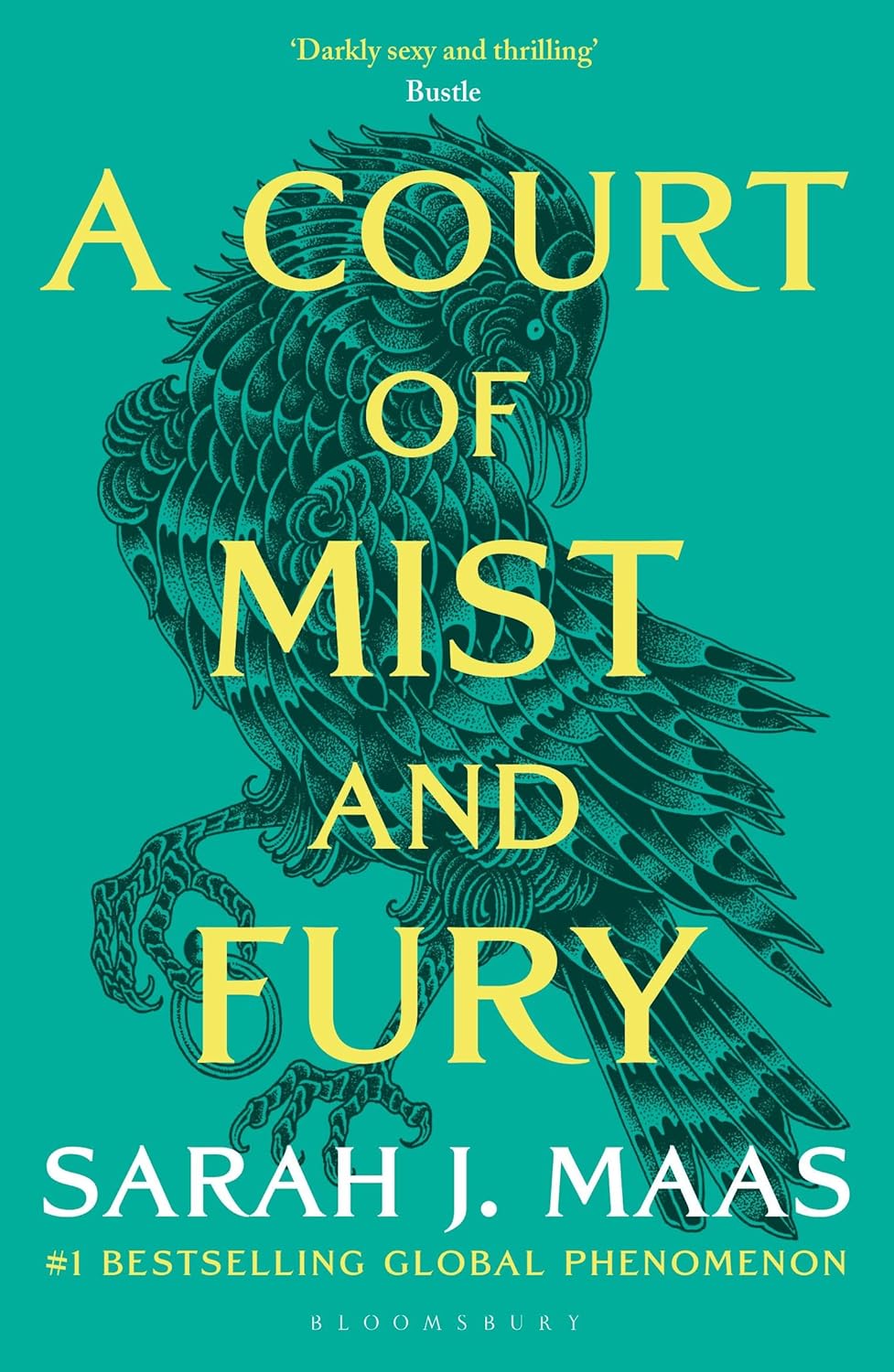 A Court of Mist and Fury
 Review: The Book That Made Me Obsessed
6 November 2026 ★★★★★
After three attempts to get into ACOTAR, I read the next three books in July 2024. From Rhysand's unexpected return to the shocking twists I never saw coming…
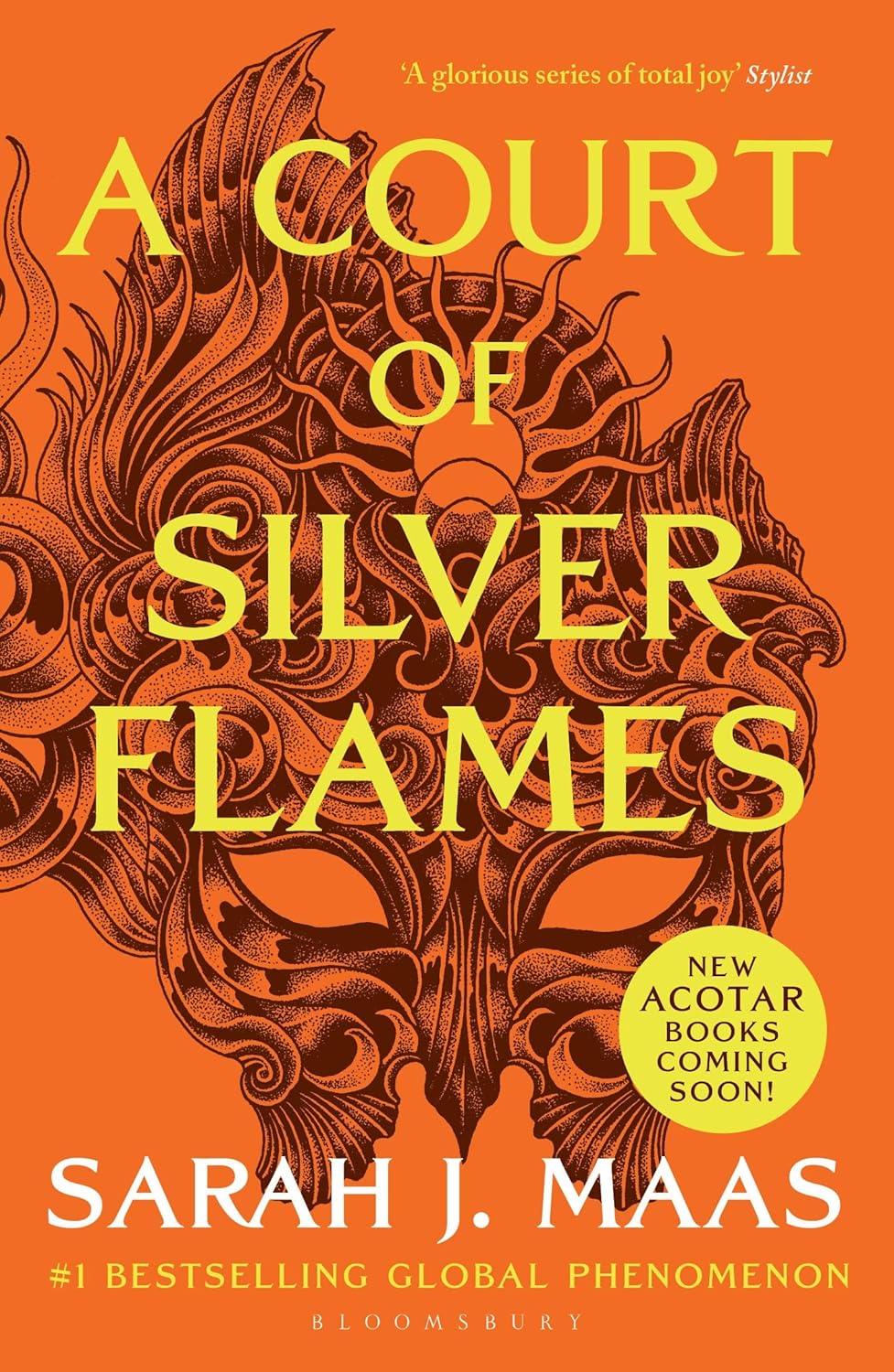 A Court of Silver Flames
 Review: Nesta, You Finally Won Me Over
6 November 2026 ★★★★☆
After struggling through A Court of Frost and Starlight, I wasn't exactly desperate for another book about Nesta's misery. But A Court of Silver Flames…
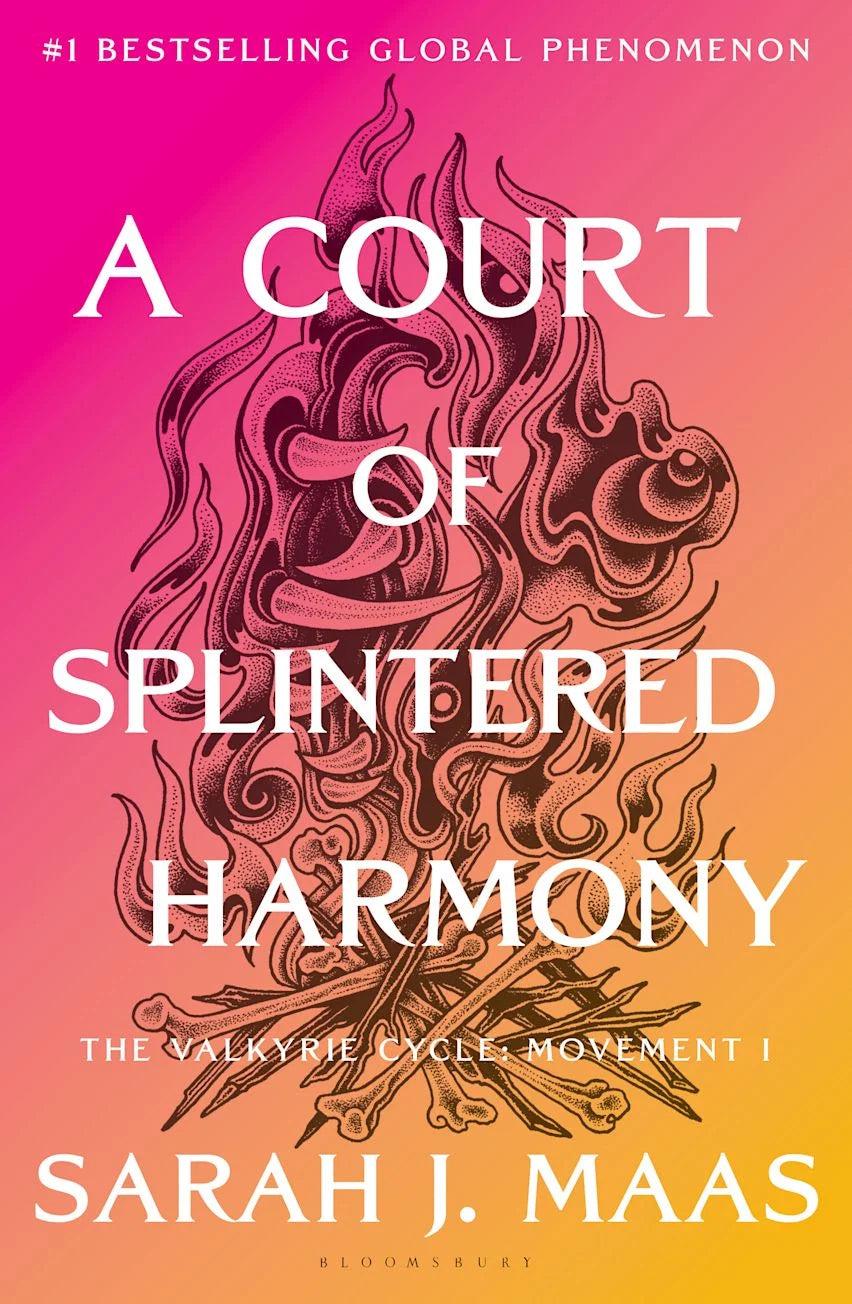 A Court of Splintered Harmony
 Review: The Bat Boys Are in My Bad Books
6 November 2026 ★★★★☆
I went into ACOTAR Book 6 excited to return to Prythian and came out questioning half my favourite characters. Between the Crescent City connections…

What did you think?
No account needed. I read every comment before it goes up, so yours will appear once I've seen it.
No comments yet. Be the first!